
The Fetish of Silence
My research examines the figure of the femme fragile in late nineteenth-century art and literature as a central expression of Decadent aesthetics. Through artists such as Paul Gauguin and the Symbolists, the thesis explores how silence, sickness, melancholia, and death became aestheticized as idealized feminine virtues in response to the anxieties of modernity. Integrating feminist theory, cultural criticism, and visual analysis, the project reframes fetishism not only as a mechanism of control, but as a complex cultural language through which fragility, otherness, and transcendence were imagined at the fin-de-siècle.
The Femme Fragile in the art of Paul Gauguin
Ariane Thomalla locates the origins of the femme fragile in the aesthetic culture of the late nineteenth century, tracing her lineage to Romanticism and its innovations in the representation of feminine interiority. Two defining elements distinguish the pictorial femme fragile: her physical fragility and her aura of tranquil withdrawal. She is typically rendered as young and pale, with translucent skin and an ethereal lightness that borders on vegetative stillness. Her emergence coincided with the tuberculosis epidemic that swept across Europe, the so-called “white plague,” which produced bodies marked by pallor, delicacy, and gradual decline. In young women, this condition was paradoxically described as a “beautiful sickliness.” Literature and visual culture elevated this consumptive body into an aristocratic ideal: refined, sexually nascent, and poised on the brink of disappearance. Likened to a flower or butterfly, her existence is brief and luminous. Her environment mirrors her condition; she is dressed in white, bathed in moonlight, cool to the touch, suspended between vitality and extinction.
Representations of women in art and literature have long oscillated between idealization and demonization. From classical dualisms to the Christian dichotomy of Eve and Mary, from the medieval conception of woman as seductive peril to Petrarch’s and Dante’s idealized muses, the myth of the “eternal feminine” has generated complementary archetypes: the femme fatale and her aesthetic counterpart, the femme fragile. Both became pervasive cultural motifs and the subject of extensive scholarly debate. This study challenges prevailing assumptions within that discourse by examining the femme fragile in the context of Decadent and Symbolist art, particularly in the work of Paul Gauguin and his contemporaries at the fin-de-siècle.
Unlike her Romantic predecessors, who functioned as distant, otherworldly “belles dames sans merci” embodying the male artist’s anguish, the Decadent femme fragile is a culturally constructed identity that aestheticizes infirmity, melancholy, and death as markers of feminine beauty. Critics have frequently interpreted such illness not as transcendence, but as a manifestation of patriarchal containment. In Die “femme fragile” (1972), Thomalla argues that the proliferation of pale, dying heroines in Decadent and Aesthetic literature responded to anxieties surrounding shifting social norms, industrial transformation, and the rise of the women’s movement. The fragile woman, rendered passive and consumptive, pacified fears of female autonomy. Helena Michie, in The Flesh Made Word (1987), similarly identifies an “aesthetic of weakness and hunger” in Victorian fiction that disguises structures of male dominance. Renate Berger and Inge Stephan extend this argument, describing nineteenth-century heroines as sacrificial figures whose illness and death dramatize the possessive logic of patriarchal society.
Within the visual arts, Decadence emerged in close dialogue with Symbolism as a distinctive language for negotiating the crisis of modernity. Artists developed imagery that sublimated contemporary anxieties — about degeneration, hysteria, evolution, capitalism, and the New Woman — into aesthetic form. Gauguin’s Tahitian works, produced between 1891 and 1903, offer a compelling case study. When examined alongside Symbolist and Decadent literature, they reveal shared thematic preoccupations: the eroticized female body, the allure of otherness, and the aestheticization of mortality. Images of the femme fragile and the femme fatale crystallize late nineteenth-century concerns with gender, sexuality, and cultural decline.
Scholars have approached this terrain from divergent angles. Bram Dijkstra, in Idols of Perversity, exposes the misogynistic undercurrents embedded in Decadent iconography, particularly in his analysis of “Ophelia and the Cult of Invalidism.” Lisa Downing, by contrast, reconsiders Decadent necrophilic aesthetics in Desiring the Dead, highlighting the transgressive agency of female authors such as Rachilde. My conception of the femme fragile expands upon these interpretations. While it acknowledges the politics of gender and possession that structure many of these representations, it also recognizes the aesthetic coherence of the fragile female body as a recurring visual topos: the indisposed woman, suspended between sleep and death, innocence and eroticism. Her prevalence signals not only misogynistic containment, but also the broader cultural turbulence of the fin-de-siècle.
“Life imitates Art far more than Art imitates Life. This results not merely from Life’s imitative instinct, but from the fact that the self conscious aim of Life is to find expression, and that Art offers it certain beautiful forms through which it may realise that energy.”
“Let a woman learn in quietness and full submission. I do not permit a woman to teach or to assume authority over a man; she must be quiet.”
The fragile woman thus occupies a long and complex lineage, from Arthurian romance and the damsel in distress to classical sleeping goddesses and Christian icons of purity. By the late nineteenth century, she becomes both symptom and symbol of modernity’s anxieties: a body aestheticized in decline, a figure through whom silence, sickness, melancholia, and death are rendered beautiful.
Paul Gauguin
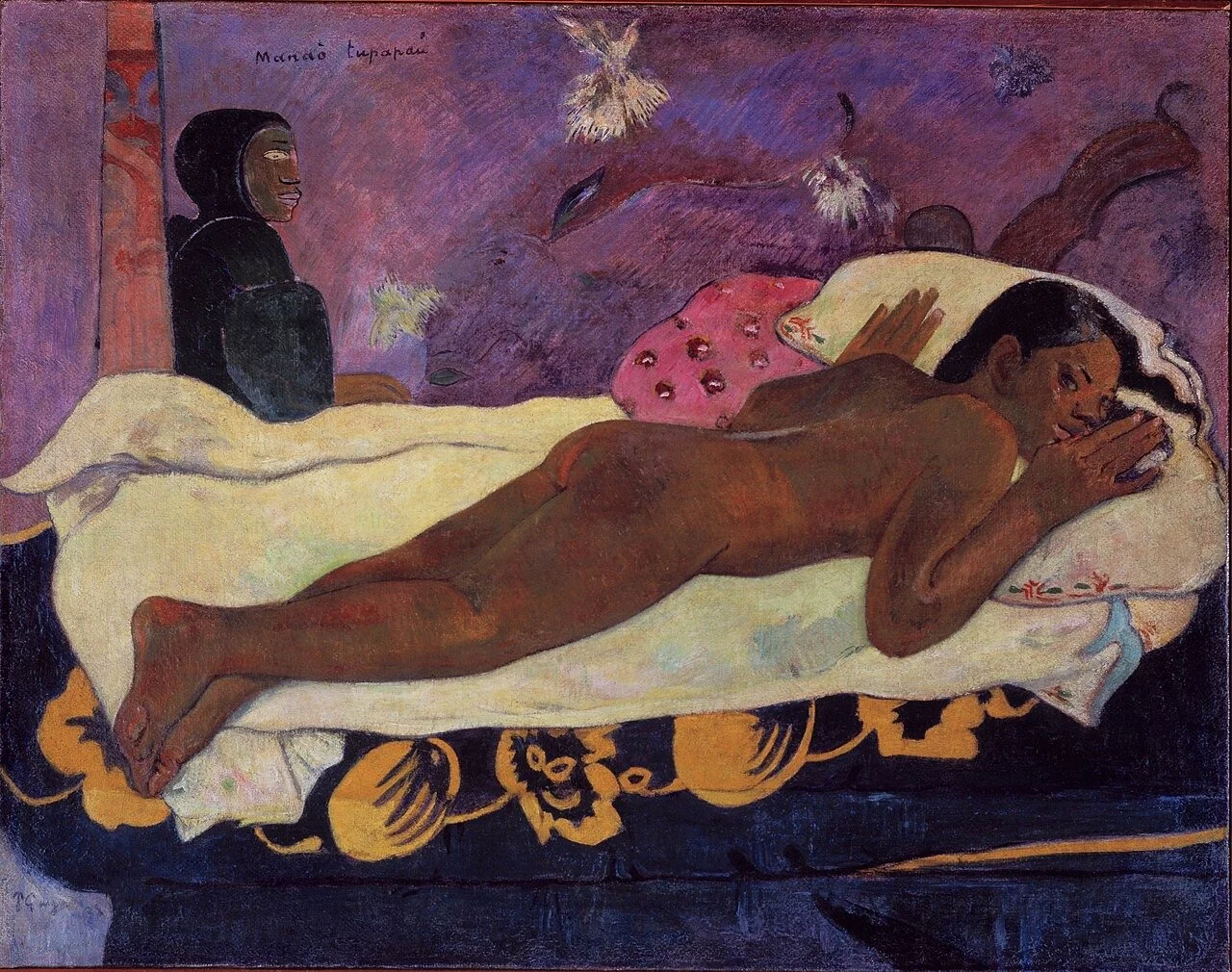
Manao tupapau (Spirit of the Dead Watching)
1892
Theme: Death / Transcendence and Sleep
Erotic fear, colonial fantasy, the sleeping female body, and the spectral gaze — it is fetishism and primitivism intertwined.
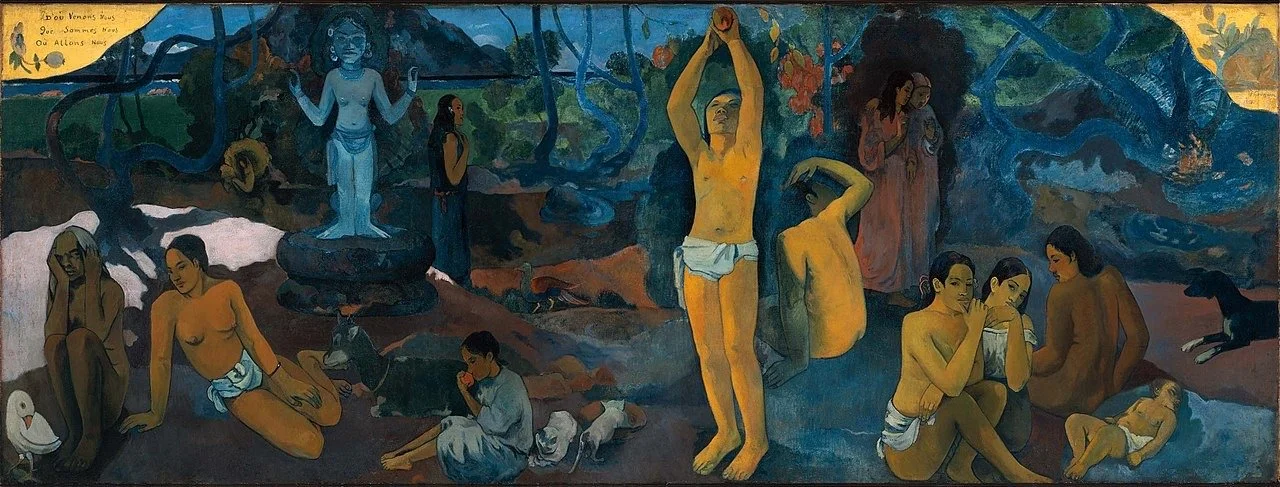
Where Do We Come From? What Are We? Where Are We Going?
1897–98
Theme: Death / Transcendence
The philosophical keystone. Civilization, innocence, mortality — staged as myth.
Other Artists
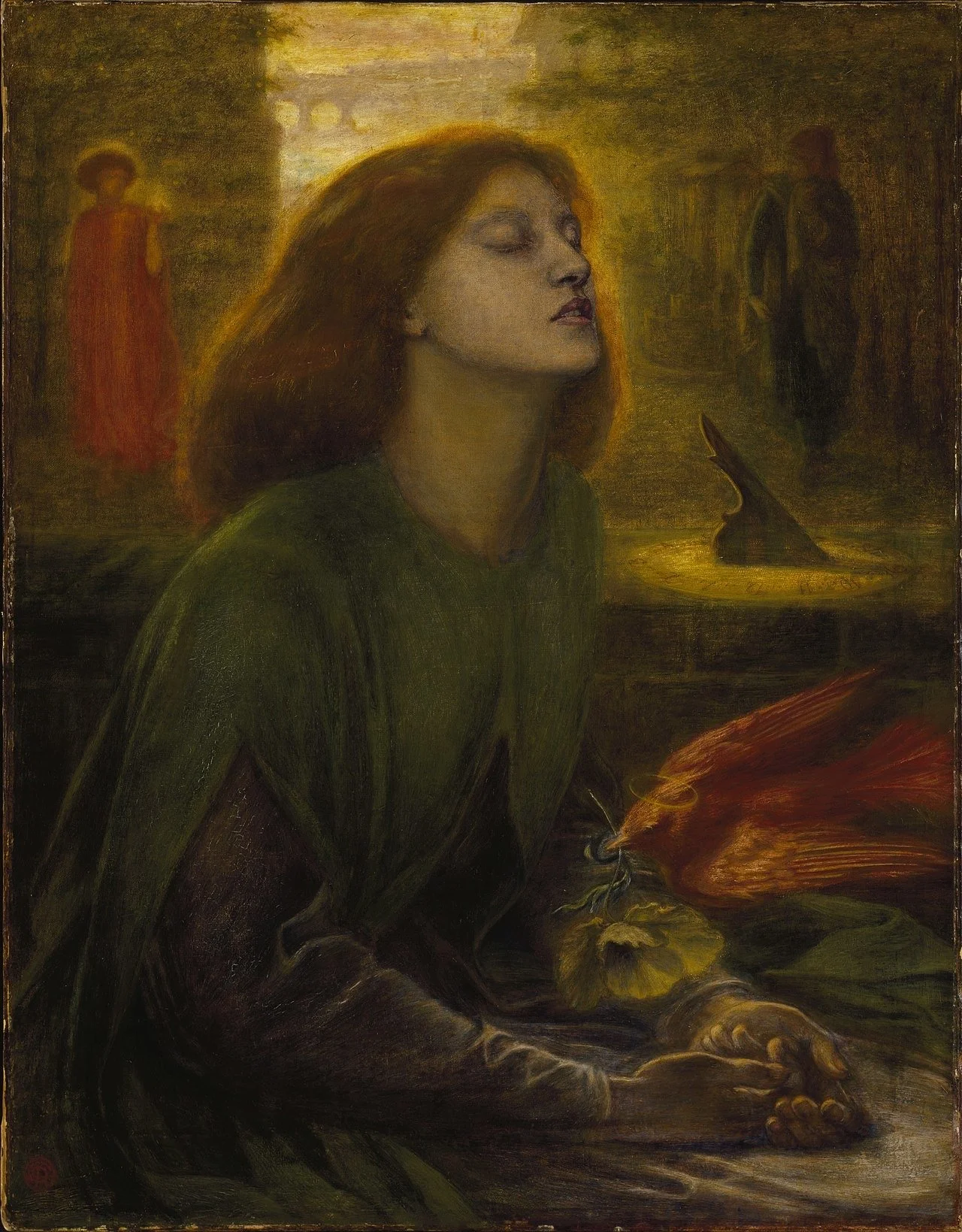
Dante Gabriel Rossetti
Beata Beatrix, 1864–70
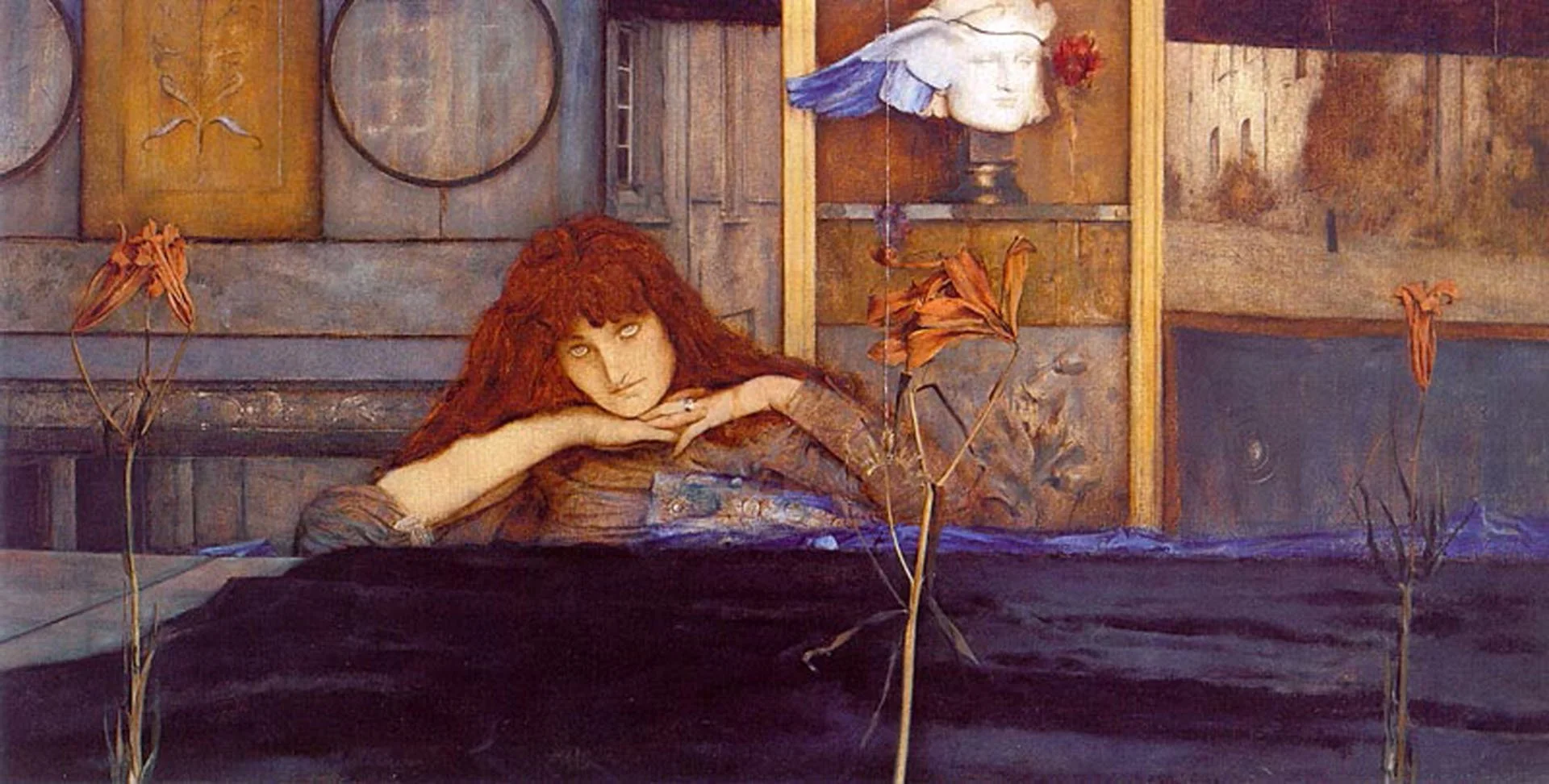
Fernand Khnopff
I Lock My Door Upon Myself, 1891
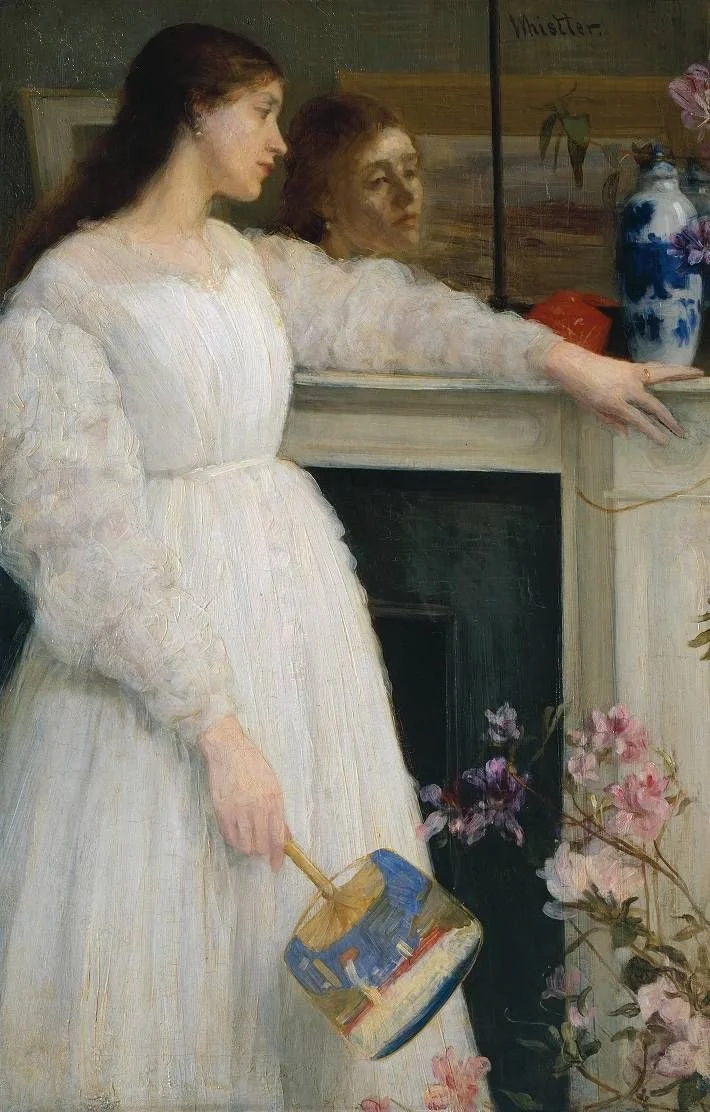
James McNeill Whistler
Symphony in White, No. 2: The Little White Girl, 1864-1865
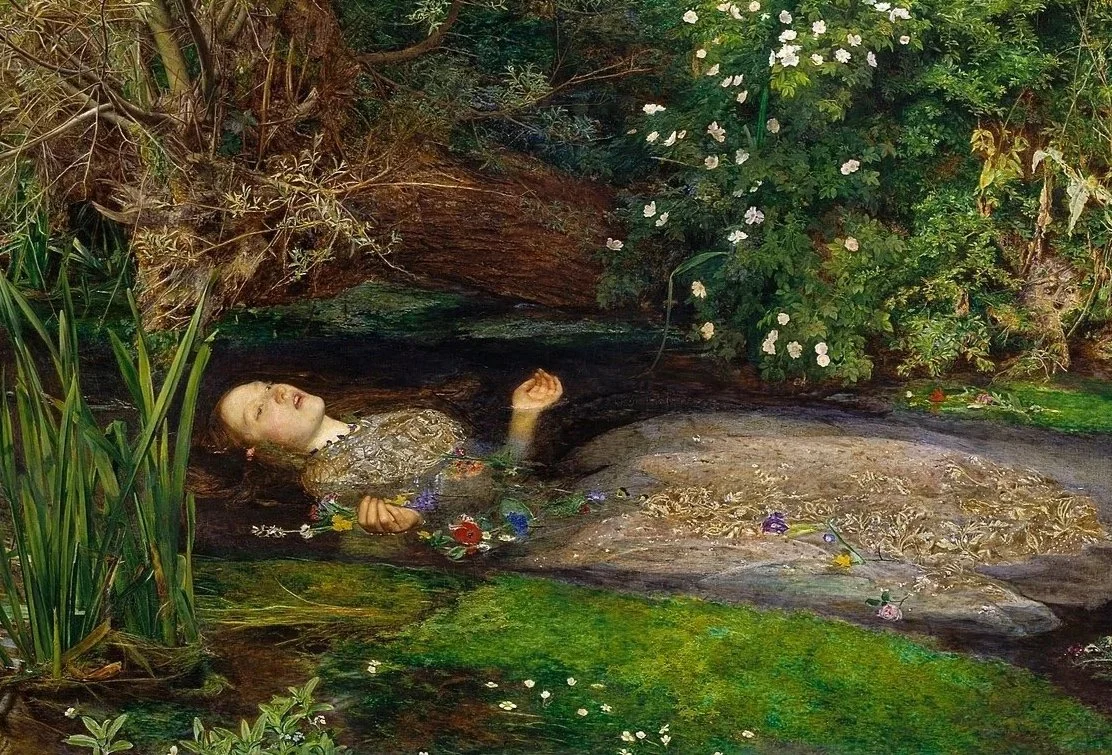
Ophelia, 1851–52
John Everett Millais
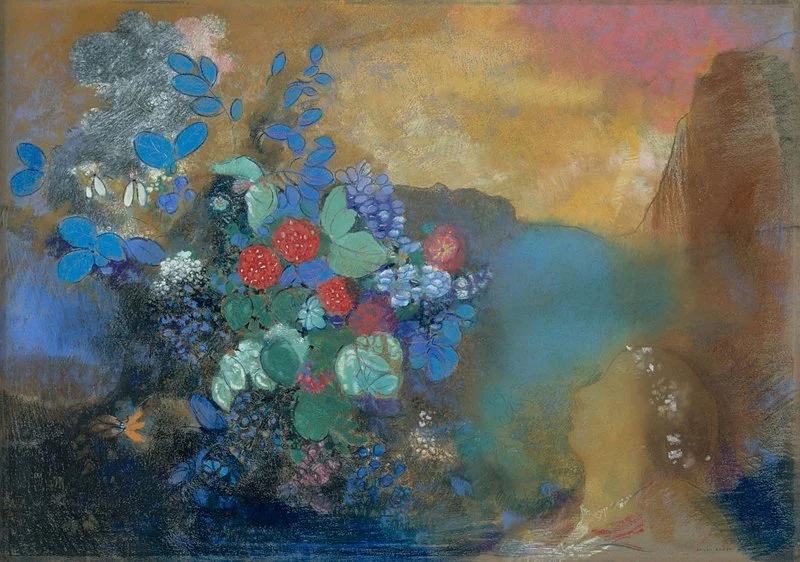
Ophelia Among The Flowers, c. 1906
Odilon Redon
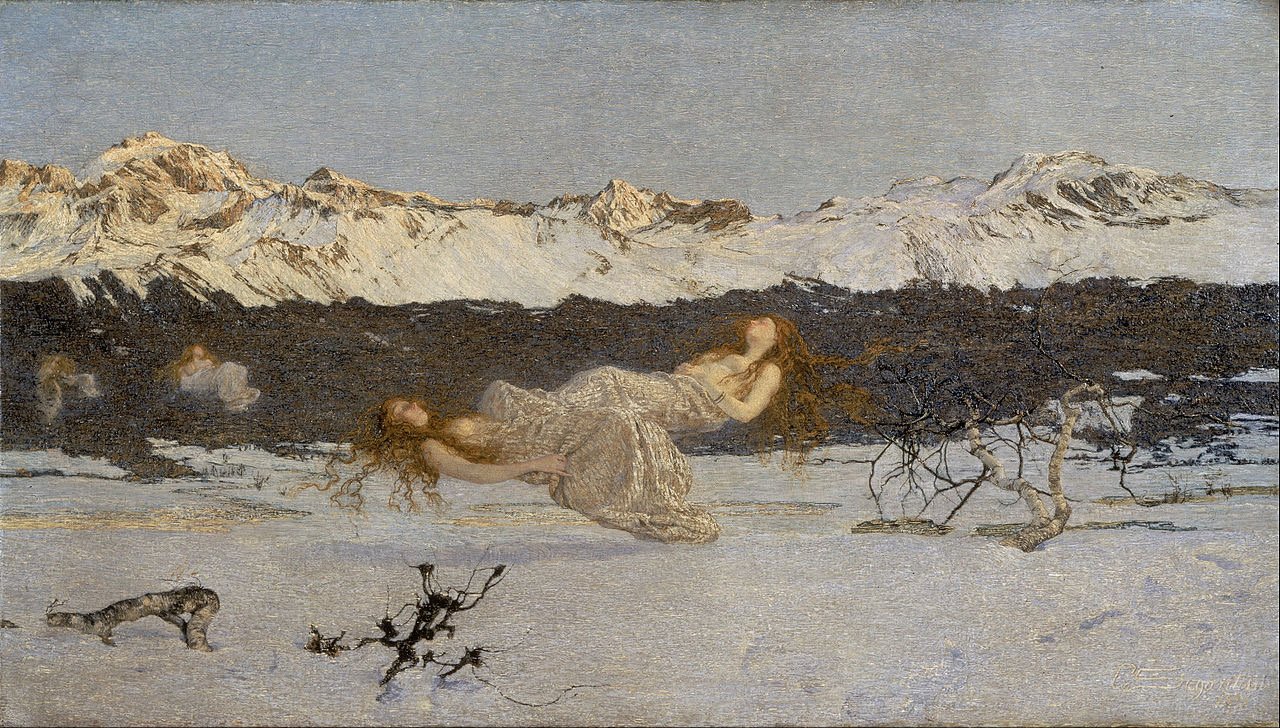
The Punishment of Lust, 1891
Giovanni Segantini
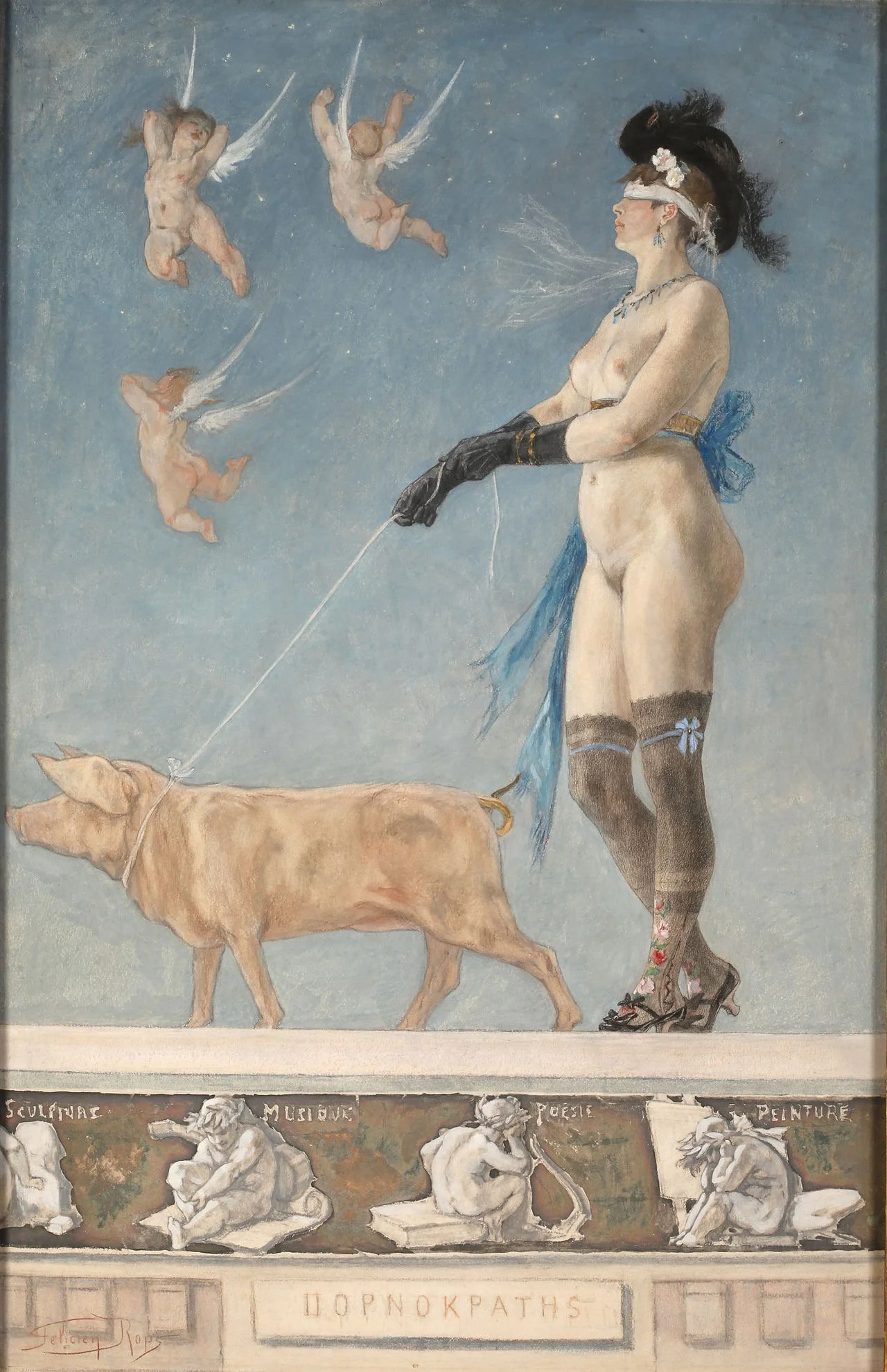
Pornokrates, 1896
Félicien Rops
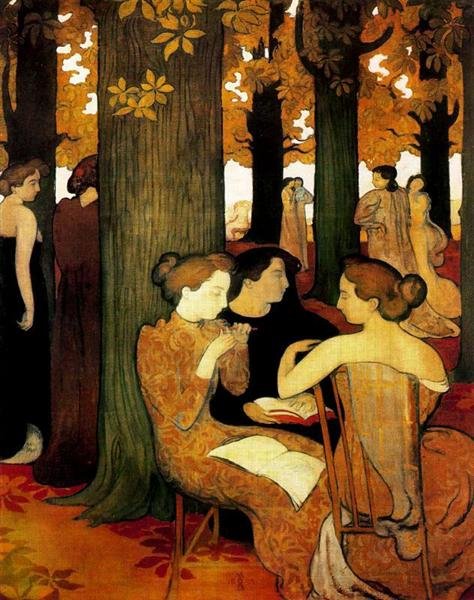
The Muses, 1893
Maurice Denis
Theme: Death
The archetype. Death aestheticized in nature. Without this, the genealogy is incomplete.
Theme: Sickness
The consumptive saint. Tuberculosis aestheticized as spiritual rapture. This is the visual birth of the sanctified fragile woman.
Theme: Silence
Withdrawal as power. The interiorized feminine psyche. This is Silence made architectural.
Theme: Melancholia
Not the dramatic drowning — the suspended, dreamlike pause before dissolution. Redon turns grief into atmosphere.
Theme: Silence / Feminine Interior
Decorative flatness, sacred domesticity, spiritualized women removed from modern chaos.
Theme: Melancholia / Pale Ideal
White, pallor, ambiguity, stillness — proto–femme fragile in tonal restraint.
Theme: Death / Moral Transcendence
Female bodies suspended in frozen ether — punishment, beauty, and elevation fused.
Theme: Fetishism / Decadent Allegory
Blindfolded woman led by a pig of gold — eroticism, capitalism, decadence distilled. This one is critical to my fetishism chapter.
Silence has long been coded as an idealized feminine virtue. A silent woman is presumed compliant; her restraint signals containment. Within patriarchal frameworks, silence functions as proof of control. The woman who speaks, who resists, who exceeds the bounds of decorum, destabilizes the social order. By contrast, silence implies submission, modesty, and moral discipline. Yet silence is not inherently passive. Historically, it has also signified stoicism, interior strength, and wisdom. The distinction lies in its gendered application. While male silence has often been interpreted as heroic or philosophical, female silence has frequently been prescribed as a behavioral norm. Women, as the adage insists, were to be seen and not heard.
This asymmetry reveals silence as a cultural construct rather than a neutral condition. In visual culture, silence becomes aestheticized. The ideal beauty does not argue, protest, or articulate dissent. She is composed, contained, inward. Her closed mouth signifies not only modesty but possession — she “knows her place.” It is precisely this visualized condition of silence that artists at the fin-de-siècle repeatedly stage and refine. In the work of Paul Gauguin, among others, the silent female body becomes a locus of projection: exoticized, immobilized, and rendered opaque. Her quietness is not incidental but central to her allure.
To speak of fetishizing silence is to suggest that an intangible condition can be transformed into a visual object of desire. Fetishism, in this sense, does not require a material token alone; it can attach itself to an attitude, a posture, or a state of being. The history of Western art is replete with silent women: penitent Madonnas, sleeping Venuses, drowned Ophelias, reclining bathers, languid invalids. These figures rarely speak; they recline, sleep, drift, or expire. Silence is not their explicit subject, but a defining symptom of their fragility.
Within the binary of the femme fatale and the femme fragile, silence marks the latter as available for dominance. Where the fatal woman threatens through speech, seduction, or agency, the fragile woman invites containment. Her stillness renders her conquerable. At the fin-de-siècle, amid anxieties surrounding the New Woman, shifting gender roles, and social upheaval, the silent female body offered a reassuring counter-image: inward, subdued, aestheticized. Silence thus becomes both symptom and strategy — a visual language through which fragility is constructed, eroticized, and ultimately controlled.
Alexandre Cabanel, Naissance de Vénus (The Birth of Venus), 1863 (Musée d’Orsay, Paris).
“Adornment, exoticism, affectation are all willed decadent strategies meant to pervert the work. Decadent images and texts live in their aesthetic excursions, in their evocation of dreams, mysterious places and states of mind, in their excess of words, not events. The surface of the paintings, the sound of the words, point to themselves as manufactured, as illusion. The decadents attempted to create imagery that announced itself as artifice.”